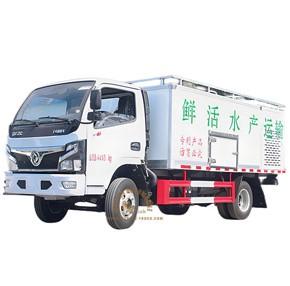
Cement mixer trucks are specialized trucks used to transport cement for construction. Due to their appearance, they are also commonly referred to as "snail vehicles". These trucks are equipped with cylindrical mixing tanks to transport mixed cement, and the tanks are always kept rotating during transportation to ensure that the cement does not solidify. After transporting the cement, the mixing tank is usually washed with water to prevent the hardened cement from occupying space and reducing the volume of the tank.
Cement mixer trucks are composed of a vehicle chassis, mixing tank, transmission system, and water supply device. The components of the mixing truck include a second-class chassis, a transmission system, a hydraulic system, a frame, a mixing tank, a feeding and discharging device, a water supply system, a control system, a ladder, and more. The mixing tank is connected to the gearbox at the front of the frame and supported by two rollers installed on the rear of the frame.
Cement mixer transport trucks consist of a vehicle chassis and a cement mixer transport device
The chassis of cement mixer trucks is mostly a second-class universal chassis provided by the vehicle manufacturer. Its specialized mechanisms mainly include power take-off devices, front and rear supports for the mixing tank, gear reducers, hydraulic systems, mixing tanks, control mechanisms, and cleaning systems. The working principle is to take the power of the vehicle chassis through the power take-off device and drive the variable pump of the hydraulic system, converting mechanical energy into hydraulic energy for delivery to the quantitative motor. The motor then drives the reduction gearbox to drive the mixing device and mix the cement.
As cement can solidify into hard blocks in a short period of time and can corrode steel and paint, washing the cement adhering to the cement storage tank and feeding port after each use is essential for daily maintenance.
This includes:
Washing the feeding port with water before each material loading to keep it moist during loading;
Adding water to the onboard cleaning water tank while loading;
Washing the feeding port after loading to remove any remaining cement;
After unloading at the construction site, washing the discharging chute and adding 30-40L of cleaning water to the cement storage tank, and keeping the tank rotating in the forward direction at low speed when the vehicle is returning;
Remembering to drain the dirty water from the cement storage tank before the next material loading;
Thoroughly cleaning the cement storage tank and the surrounding feeding and discharging ports every day at the end of work to ensure that no cement or cement blocks stick.
If any of these tasks are not done properly, it can cause significant trouble in future work.
The function of the driving device is to drive the rotation of the cement storage tank, which is composed of a power take-off device, universal joint, hydraulic pump, hydraulic motor, control valve, hydraulic oil tank, and cooling device. If this part stops working due to a malfunction, the cement storage tank cannot rotate, causing the cement inside the truck to become unusable or even solidify in the tank, which can lead to the scraping of the cement mixer truck. Therefore, the reliability of the driving device must be highly valued during use.
Ensuring the Welfare of Aquatic Life: Live Fish Transport Trucks ExplainedNovember 13, 2023The transport of live fish is a critical aspect of the aquaculture and aquarium industry. Whether you're a commercial fish farmer, a hobbyist, or a retailer, the well-being of the aquatic life dur...view
The Advantages and Key Considerations of Bitumen Truck in Modern ConstructionDecember 24, 2025Bitumen Truck Advantages and ConsiderationsAs global infrastructure development accelerates, the demand for efficient asphalt transportation solutions continues to grow. Bitumen trucks have become ind...view
Outdoor Advertising: Mobile LED TruckJune 6, 2025Mobile LED trucks take the LED screens that were previously mounted on rooftops or high pillars and put them on trucks, allowing them to be driven to squares or pedestrian streets during holidays to a...view
Rising Demand for Maintenance Trucks in African Mining Sites Marks a New Trend in the Special Vehicle IndustryJuly 25, 2024Rising Demand for Maintenance Trucks in African Mining SitesThe African mining industry has experienced a significant rise in the demand for maintenance trucks in recent years. This surge in demand ha...view
Safety Considerations for High Altitude Operation TrucksJuly 12, 2024When it comes to operating trucks at high altitudes, safety should always be the top priority. One brand that is known for its reliable high altitude operation trucks is MANTEN. These trucks are equip...view
Wholesale Live Fish Transport Trucks: Enhancing Efficiency, Sustainability, and WelfareJune 8, 2023Introduction:Transporting live fish from fish farms to wholesalers or retailers is a crucial aspect of the seafood industry. It requires specialized equipment to maintain optimal water quality, temper...view