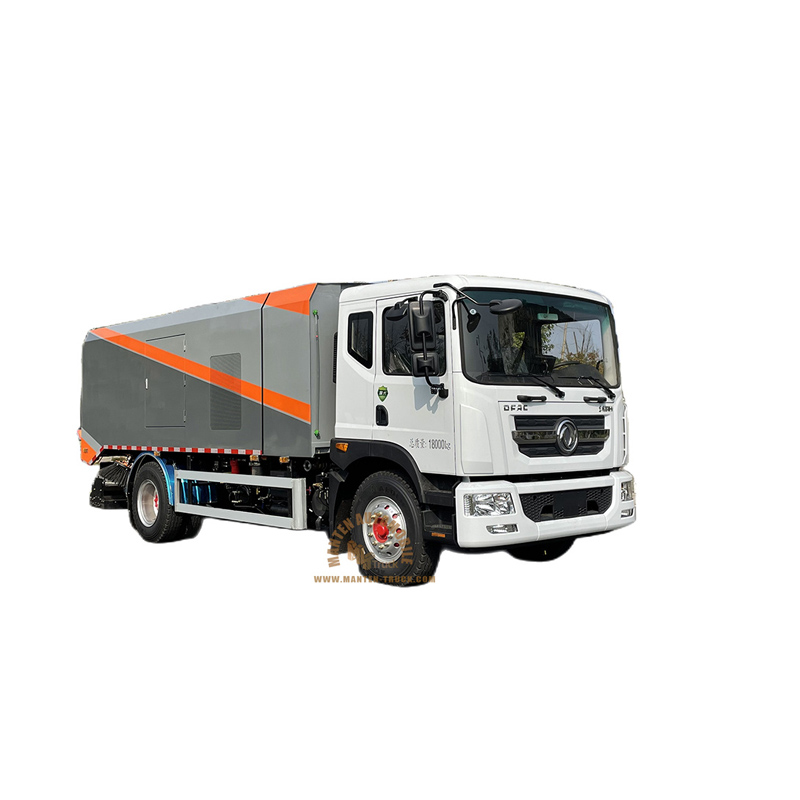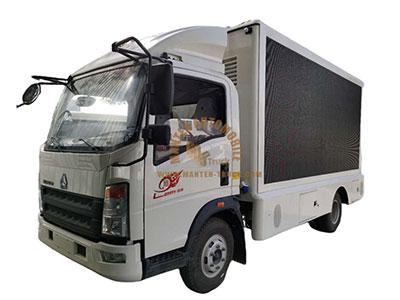
Water trucks generally operate in urban areas, and a tire blowout can have a significant impact on the safety of surrounding citizens. Therefore, it is essential to take precautions to avoid tire blowouts on the road, and the simplest method is to perform regular inspections and maintenance.
Check if there are any bulges on the tires of the sanitation sprinkler truck
The tire surface may have bulges or blisters where the strength is insufficient or where the thickness is locally thinnest. These bulges are higher than the normal tire surface and are the most obvious sign of tire blowouts, which can occur suddenly at any time. Tire bulges are generally irreparable, and if they occur, do not drive the vehicle on the road. The vehicle must be quickly sent to a repair shop to check for tire malfunctions and replace the tire immediately.
Do not ignore small cracks on the sanitation sprinkler truck's tires during visual inspections
When checking the tire pressure, look for sharp objects that could scratch the tire surface. Even if the scratch is not deep, it should be noted that small cracks can cause the tire to become worse and cause problems when driving the sprinkler truck. Check the tire wear pattern. Excessive wear on the tire shoulder indicates insufficient tire inflation, while wear in the central area indicates over-inflation.
Check the tread depth of the sanitation sprinkler truck's tires
New tires have deeper tread patterns and shorter braking distances. If the tread pattern is shallow, the braking time will be longer, and the braking distance will be longer, so pay attention to this. Do not wait until the tread pattern is worn out before replacing the tire; it must be replaced in a timely manner to prevent the risk of tire blowouts.
Clean the small stones from the sanitation sprinkler truck's tires in a timely manner
The gaps in the sanitation sprinkler truck's tires can be used for drainage, and these gaps can also increase friction. If there are too many small stones in the tire gaps and they are not cleaned regularly, the tire may not be able to drain water quickly when it rains, or too many small stones may reduce the friction between the tire and the road surface, increasing the braking distance when braking.
Check for sidewall cracks on the sanitation sprinkler truck's tires
Visible cracks or notches on the sidewall of the tire indicate that the tire may leak air or even cause a tire blowout. This detail must not be overlooked and must be carefully checked.
Check the wear indicators on the sanitation sprinkler truck's tire tread
The wear indicators on new tires are not visible, but as the tire wears to a certain degree, the hidden wear indicators in the tire grooves will become visible. As soon as the indicators appear, drivers of sprinkler trucks should be careful on wet roads. If all the indicators on the tire are visible, the tire must be replaced as soon as possible.
Avoid over-inflation and under-inflation of the sanitation sprinkler truck's tires
It is not advisable to overinflate tires, as they may burst due to excessive expansion pressure during high-speed operation. Therefore, the standard tire pressure should be maintained according to the manufacturer's requirements, including the spare tire pressure. Underinflation is the biggest enemy of tires. It can accelerate the wear of the tire tread at the outer edge (or shoulder), generate excessive heat, reduce the service life of the tire, and increase fuel consumption due to the increased rolling resistance, making it difficult for the vehicle to move. Tire pressure can be measured with a tire pressure gauge, but it must be measured at normal temperature because measuring it when the tire is hot will produce inaccurate results.
These are the precautions for tire maintenance. Don't think that only private cars need maintenance. As a city sanitation vehicle, the sprinkler truck is used more frequently and bears greater responsibility, so tire inspection and maintenance should be done well.
CLICK FOR Water Sprinkler Truck For Sale
Explanation of the Negative Pressure Ambulance System DesignJune 6, 2025Principle of the Negative Pressure Ambulance SystemThe negative pressure ambulance system consists of a casing, filtration system, disinfection system, exhaust system, and control system. It ensures t...view
Is an Aerial Work Platform Truck Right for Your Next Project?—A Practical Buyer’s GuideMay 26, 2026If you manage infrastructure maintenance, run a construction crew, or oversee municipal services, you have probably wrestled with the same question more than once: How do we get people and tools up th...view
Isuzu Fsr 4x4 240hp Military Truck (Army Transprot Truck)August 22, 2022At the beginning of 2022, our company cooperated with isuzu china to customize a batch of fsr 4x4chassis for export. The chassis is produced according to the design drawings of isuzu japan.view
Choosing the Perfect Isuzu Prime Mover: A Comprehensive GuideJune 15, 2023IntroductionWhen it comes to selecting a reliable and high-performing prime mover for your business, Isuzu has established itself as a leading brand in the market. With their commitment to quality, du...view
The Essential Role of Workshop Lorries in Emergency RepairsJuly 12, 2024In the fast-paced world we live in today, emergencies can strike at any moment. Whether it's a plumbing issue at home or a breakdown on the road, having access to a reliable workshop lorry can mak...view
The Essential Role of Guardrail Cleaning Trucks in Highway MaintenanceJanuary 26, 2024When we think of highway maintenance, we often overlook the crucial role played by guardrail cleaning trucks. These specialized vehicles are responsible for keeping our roadways safe and visually appe...view