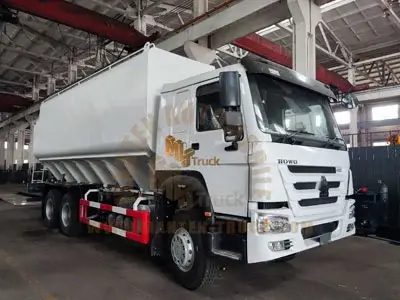
In recent years, frequent accidents involving oil tanker trucks have not only caused significant property losses but also led to casualties, attracting widespread public concern. To ensure the safety of oil tanker transportation and prevent potential risks, this article will elaborate on the safety precautions for oil tanker trucks from multiple aspects.
When loading oil, oil tanker trucks should strictly control the amount of oil loaded. Loading too little oil can result in excessive shaking space during transportation, easily generating static electricity and increasing safety hazards. On the other hand, overloading can cause spillage in vehicles with poorly sealed tank openings, leading to accidents. Therefore, it is recommended that the oil loading be controlled at approximately 85% of the tank's capacity. Additionally, during driving, a moderate speed should be maintained, avoiding sharp acceleration and braking to ensure the oil remains relatively stable within the tank, thereby reducing safety hazards caused by shaking.
Static electricity is a non-negligible safety hazard in oil tanker transportation. To reduce static electricity accumulation, oil tanker trucks should be equipped with properly connected static grounding wires that ensure good contact with the ground. Furthermore, drivers and accompanying personnel must strictly abide by the no-smoking rule, refraining from smoking or carrying fire sources in the vehicle. When parking, the vehicles should be kept away from fire sources and avoided being parked near potential ignition sources to prevent explosion accidents.

Oil tanker, as a vehicle for transporting dangerous goods, its technical condition is directly related to transportation safety. Therefore, the driver should regularly inspect and maintain the vehicle, with a focus on checking the sealing of the fuel filling hole, the leakage of the discharge valve and the discharge pipe, the smoothness of the fuel tank ventilation hole, etc. At the same time, the installation position of the gasification furnace and the exhaust pipe of the internal combustion engine should also meet safety requirements and not be backfilled or installed at the rear of the vehicle. In addition, the electrical equipment on the vehicle must have good insulation and no sparks should be generated.

In case of leaks, fires, or other emergencies during oil tanker transportation, emergency plans should be immediately activated, and the scene should be evacuated promptly while calling emergency services for assistance. The vehicles should be equipped with special fire extinguishers and other emergency equipment to facilitate initial fire suppression. Moreover, drivers and accompanying personnel should receive professional emergency training and drills to enhance their ability to respond to unexpected events.
Recent oil tanker accidents, such as the explosion and burning of an oil tanker in Ya'an, Sichuan, and the rollover and fire of an oil tanker on the Beijing-Shenyang Expressway, have had severe consequences. These cases serve as stark reminders that oil tanker transportation safety cannot be overlooked. It is imperative to strictly abide by all safety regulations and operating procedures to ensure that every aspect of the transportation process is foolproof.

As essential tools for dangerous goods transportation, the safe driving and protection of oil tanker trucks are of paramount importance. By strictly controlling oil loading, maintaining moderate driving speeds, effectively preventing static electricity, keeping away from fire sources, strengthening vehicle maintenance and inspection, and being prepared for emergencies and rescues, we can significantly reduce safety risks during oil tanker transportation and safeguard the lives and property of the people. Let us work together to ensure the safety of oil tanker transportation.
Negative Pressure Ambulance: Safeguarding Patient Care during Infectious Disease TransportDecember 24, 2025In the evolving landscape of emergency medical services, the negative pressure ambulance has emerged as a critical solution for safely transporting patients with highly contagious diseases. At Manten,...view
MANTEN New Customized LPG Truck Has Been Officially DeliveredJune 1, 2024Manten successfully delivered a batch of customized Dongfeng 24,000 liter LPG refueling trucks to help customers achieve efficient transportationIn the latest development, Manten's highly customiz...view
25ton Wrecker Tow Trucks Successfully Entered the African MarketAugust 29, 2023Heavy type HOWO 25ton of wrecker tow truck recently announced a successful entry into the African market, which marks as Manten officially began to export its high-quality wreckers to African countrie...view
Tips and Precautions for Using Fire Cannons on Firefighting TrucksAugust 2, 2023Firefighting truck water cannons are composed of a base, inlet pipe, rotating body, water collecting pipe, jet regulation ring, handle, and locking mechanism. The gun body can be rotated horizontally ...view
What to Look for When Buying an Airport Fire Truck in 2026May 26, 2026Airport fire trucks—formally called ARFF vehicles—belong to one of the most specialized segments of the emergency vehicle industry. They are not scaled-up municipal pumpers. They are purpose-built m...view
Record the Delivery of 30sets of Sewage Suction Semi Trailer Export to Namibia.May 31, 2024For the Namibia government tender, MANTEN won the bids in the end of year 2023. We have arranged production and shipment for the first batch timely as the contract.The Sewage Suction Semi Trailer are ...view